Video
Media Pending: Unit Video
Intended content: Full narrated video presentation, including visual assets, caption file, and transcript.
Learning purpose: Illustrates the distinction between internal recursion (same-system reflection) and external verification (independent oracle observation).
Planned form & duration: Video, ~9 minutes.
Accessible text alternative: Tarski's and Goedel's results concern specified formal The written material below covers the same complete learning path.
The module's closing unit, and the last required one. No new practical work: it names the question the earlier units kept running into, says where that question comes from, and closes off the three overclaims easiest to reach from it. Units 0 to 8 make complete sense without it.
Reading time: about 15 minutes. Activity: about 12 minutes.
Checkpoint: cp18-sort-the-claims.
Before this unit: Unit 17 (disclosure, defence, and the evidence pack).
No prior study of logic or cybernetics is assumed. Every specialist term needed for the activity is defined below; the optional further reading carries the advanced detail.
What this unit does, and what it does not do
This unit covers established, published material: a distinction from cybernetics, where it came from, and two classical theorems about self-reference. Its job is to raise the issue and say what "second order" means. It proves nothing about language models and teaches no unpublished research. That restriction is deliberate: the module has spent three hours training you to ask what supports a claim, and a closing unit that quietly imported an unsettled framework would fail its own test in front of you.
Bracket labels — [C1], [C4], and so on — resolve to course/references.md, and
course/second-order.md carries what this page leaves out — the structural
account of understanding, and the constraints the unit is written under.
The title, and the movement behind it
The unit is called Alles Lüge! — "all lies!". That is the first step of a movement, not its conclusion, and the page walks all three steps.
- Everything sounds like a lie. If every record was made by some observer, from inside the system, nothing arrives already certified, and the short way to read that is: trust none of it. Lacrimosa's line, quoted in section 5, is that position at full volume [Q1].
- The standpoint above is gone. Harder, and more accurate. The trouble is not that everyone is lying; it is that there is no outside position from which a claim could be settled once and for all. "Gott hat sich erschossen / ein Dachgeschoss wird ausgebaut" — God has shot himself; a loft is being converted (Einstürzende Neubauten, "Haus der Lüge") [Q3]. Both halves of that matter: no architect, and the building work carrying on regardless. Sections 2 and 4 are the same step in published form — the observer is inside the system it describes, and a formal system cannot define a truth predicate for its own sentences.
- What is left is a method, and you have used it since Unit 8. Warrant does not descend from above; it is assembled locally. Section 5 is that step.
Despair, then the missing god's-eye view, then acceptance — practical rather than consoling. If you take one step of the three from the title, take the third.
1. What you have already done
Five things, all done with your hands before you met any of the language here.
- B4 derived from the recurrence on paper, before you saw any generated code.
- The checker reporting
b1-signrather than "wrong". - Two valid Bernoulli conventions disagreeing at B1 and nowhere else, because neither program had said which one it used.
- Ada's B7 and the modern B7: one label, two different terms.
- A disclosure and a defence, written separately.
Section 3 says how each of those reads in this unit's vocabulary. Underneath all five is one question: where is the observer standing? When you check something, are you outside the system you are checking, or part of it? That question did not begin with artificial intelligence, and it has a substantial published literature going back to the 1940s. The rest of this page is what that literature calls it.
In the plain language used here:
- the observer is the person or system making a claim or carrying out a check;
- the context is the convention, specification, setting, and limits under which the claim is made; and
- the record is the retained evidence of what was observed or checked.
These three details make a claim easier to evaluate. They say who did what, under which conditions, and where the evidence can be inspected.
2. First order and second order
The distinction comes from cybernetics and is usually put like this.
- First-order cybernetics — the cybernetics of observed systems. The observer stands outside, describing a system without being part of it.
- Second-order cybernetics — the cybernetics of observing systems. The observer is included in the system being described.
Heinz von Foerster formulated the distinction in those terms [C1]. Margaret Mead's 1968 address "Cybernetics of Cybernetics" is commonly cited as the point where the reflexive turn was named [C2].
The consequence is small to state and large in effect. An observer inside the system is not taking a free look from nowhere: observing takes time, costs something, and can change what is observed. Claims stop being simply true or false and start carrying an index — who observed, in what context, with what record. Maturana's compact version: anything said is said by an observer [C3, p. 8].

An observer is a thing with a reach and a cost, not a viewpoint. Drawing by the module.
A note on precision, since this unit is about exactly that. This line is very
often quoted as everything said is said by an observer. It is not: page 8 of
[C3] reads anything. The everything form is the title of a later Maturana
essay (the 1987 piece in Thompson's Gaia: A Way of Knowing; see the note under
[C3] in course/references.md), and it has propagated by repetition into
places that cite the 1980 book for the wording it does not contain.
Two notes on the vocabulary, because both catch people out.
- This is not the first-order/second-order distinction in logic. The same words name different contrasts in different fields; this page means the cybernetic one.
- Including the observer makes a claim more checkable, not less: an indexed claim says what would have to be compared with what. Naming the Bernoulli convention turned an unresolvable disagreement into a resolved one.
Where it comes from
The Macy Conferences on Cybernetics were ten meetings held between 1946 and 1953, funded by the Josiah Macy Jr. Foundation and chaired by Warren McCulloch [C4]. Their mixed disciplines and the later development of the reflexive question are described in the optional further-context section.
Second-order cybernetics is a recognised research tradition with a literature, not a fringe or recent position. It is also a tradition rather than a theorem — a category, not a criticism. A programme can be decades old, published and influential while remaining a way of framing problems rather than something anyone proved. Telling those apart is the exercise at the end of this unit.
Keep two kinds of claim separate. Second-order cybernetics supplies an interpretive lens: a published way to frame observer-dependent problems. The logic results in section 4 are proved theorems within stated formal conditions. The lens does not follow from the theorems, and the theorems do not prove the module's interpretation.
3. The mapping, and what it is not
Adapted from course/second-order.md §3. The left
column is what you did; the right is a reading of it.
A reading, not a proof. None of it is a deduction from the theorems in section 4. Reject the whole second-order framing and you still have a working oracle, a checker, and a correct routine.
| What the module does concretely | The second-order reading |
|---|---|
| The AI cannot tell you whether its Bernoulli routine is right; the oracle can. | The check has to come from somewhere the system being checked does not control. An observing system observing itself is the hard case. |
B1 = -1/2 and B1 = +1/2 are both correct and they disagree. |
The claim was incomplete without its context. Supply the index — which convention — and the disagreement dissolves. |
| Ada's B7 and the modern B7 are different numbers under the same symbol. | Two observers, two contexts, one symbol. Not an arithmetic error by either. |
| The oracle is trustworthy because it is exact, external, and independently checked against published values. | Agreement between independent records, rather than access to a view from nowhere. |
The checker names b1-sign or ada-indexing instead of reporting "wrong". |
Which kind of disagreement this is determines what to do about it. |
| Note G's operation-4 inversion is established; its attribution is contested; and "what the faulty table computes" has as many answers as there are readings of it. | Saying which part is which — and which object a claim is about — is itself part of the claim. |
| Disclosure says how it was made; defence says why it is right. | Provenance and warrant are different things, and neither substitutes for the other. |
One working account of understanding, not a settled definition. On the structural account used in this module, your internal model supports understanding when its parts, relationships, and predictions continue to correspond reliably with the target under relevant checks. The lab gathers evidence for that correspondence through predicted values, property checks, and the first place two records diverge.
That capacity is separate from the target's empirical correctness. You can model a wrong table accurately, as the module's authors did with one faulty reading of Note G's table — while misnaming which reading it was. In that case you understand what the table says without making the table right. A defence therefore needs evidence both that your model corresponds to its target and that the target is appropriate and correct for the claim you are making.
Other accounts emphasise causes and counterfactuals: understanding includes being
able to say what would happen after an intervention, or what would change under a
different condition. These are alternatives and useful additions, not positions
this short module settles. course/second-order.md gives the optional formal
structural statement (f : M1 → M2) and its limits. The practical rule remains:
pause when you can no longer understand and defend what is being produced. In
operational terms, pause if you cannot predict relevant behaviour, explain the
transformation, identify an independent check, or interpret a failed check.
Confidence is not a fifth form of evidence.
4. The classical results on self-reference
Three plain definitions come first:
- A formal system uses explicit symbols, starting assumptions, and rules for deriving one statement from others.
- A theorem is a statement established by proof under stated rules and assumptions.
- A truth predicate is an expression inside a language that would classify sentences of that language as true or not true.
Two established theorems are the rigorous core of "a system cannot fully account for itself from inside", and their limits matter as much as their content.
- Gödel's first incompleteness theorem (1931): any formal system that is consistent, effectively axiomatised — its axioms can be listed by a procedure — and strong enough to express elementary arithmetic contains a sentence it can neither prove nor refute [C6].
- Tarski's undefinability theorem (1936): for such a system, arithmetical truth for its own language is not definable within that same language [C7].
Those qualifications are not decoration, and this unit would be doing the thing it warns against if it dropped them. "Consistent" and "effectively axiomatised" are load-bearing: remove the second and the theorem is false, because the set of all true arithmetical sentences is consistent and complete and simply cannot be listed by any procedure. The popular one-line versions omit exactly these conditions, which is what makes them so easy to carry somewhere they do not go.
The usual gloss adds that the unprovable sentence is true. That is a further step: it holds under the intended reading of the symbols, and saying so means saying which interpretation you mean. Provability is a property of the system; truth is a property relative to a model.
What they do not say
This subsection matters more than the two lines above it, so read it slowly.
Both are mathematical results about formal systems of a specific kind: abstract entities with explicit symbols and deductive rules. A language model, however, is not a formal theory; it is a physical system — software running on hardware — studied by physics, engineering and experiment.
Applying a theorem about a formal, mathematical system directly to a physical, empirical one is a category error. They do not straightforwardly transfer to language models, to institutions, or to people, and this unit does not claim they do. Their role here is to establish that limits on self-reference are real and provable somewhere in logic — much weaker, and much safer, than asserting a mathematical limit on a particular piece of physical AI software.
A claim that Gödel settles something about machine intelligence is missing its middle. Not because software and formal systems are unrelated — a computer can implement a formal system, and results about formal systems can bear on computation, which is how computability theory works at all. The gap is specific: to carry the theorem across you have to say which component you are treating as a formal theory, show that the theorem's conditions actually hold of it, and argue that what follows for the formal object also follows for the running system. Each of those is a real step and each can fail.
So the fault is not the analogy. It is asserting the conclusion without the argument, and the conclusion may well be true for other reasons. Noticing that missing middle — in a paragraph that is fluent, confident, and cites a real theorem correctly — is the skill this module teaches.
5. What this does not license
Three overclaims are easy to reach from here. This unit closes each one off.
"Nothing can be known" — overclaim
The move is from a guarantee to a method: state your context, keep records, compare independent ones. The module is its own counterexample. You finished Unit 8 with evidence that your routine agreed with the oracle over the tested indices and satisfied the checked properties under a stated convention. That scoped conclusion is stronger than felt certainty because it states its limits. The module itself was made by that method rather than exempted from it: AI-assisted, then held to external checks before it reached you, with its AI-use disclosure recorded once at module level as the honest record of how, which is the difference between trusting it and taking it on faith.

Step one, and the position this section refuses. Illustration, AI-generated.
"Und doch ich hör' nur Lügen" — and yet I hear only lies — (Lacrimosa, "Alles Lüge") [Q1]. That is step one of the movement above, and it is the position this section refuses. Total distrust is not scepticism but a way of stopping checking: someone who doubts everything cannot decide where to spend the effort.
"Therefore AI cannot be trusted at all" — overclaim
The observer question applies with equal force to human reasoners, to the oracle, to peer review, and to the published Note G table that was wrong for a long time. Nothing here establishes how often a language model is right or wrong. The response is architectural, not attitudinal: put the check outside the thing being checked, index the claim, say what kind of support you have.
"Gödel and Tarski prove that AI cannot verify itself" — overclaim
They do not; see section 4. This is the most interesting of the three, because both halves are true and the join is not: real theorems, real systems, and an unstated argument between them. That shape reads extremely well, and it is exactly what Unit 7 trained you to catch.
What is left once the god's-eye view goes
Step three, and where the movement the title opens actually ends. Look under the system for the bedrock and there is none: "It is as black as Malevich's Square" (Einstürzende Neubauten, "Sabrina") [Q2] — a square you can stare into, holding nothing. The work goes on anyway, in the same house, on the same floor.
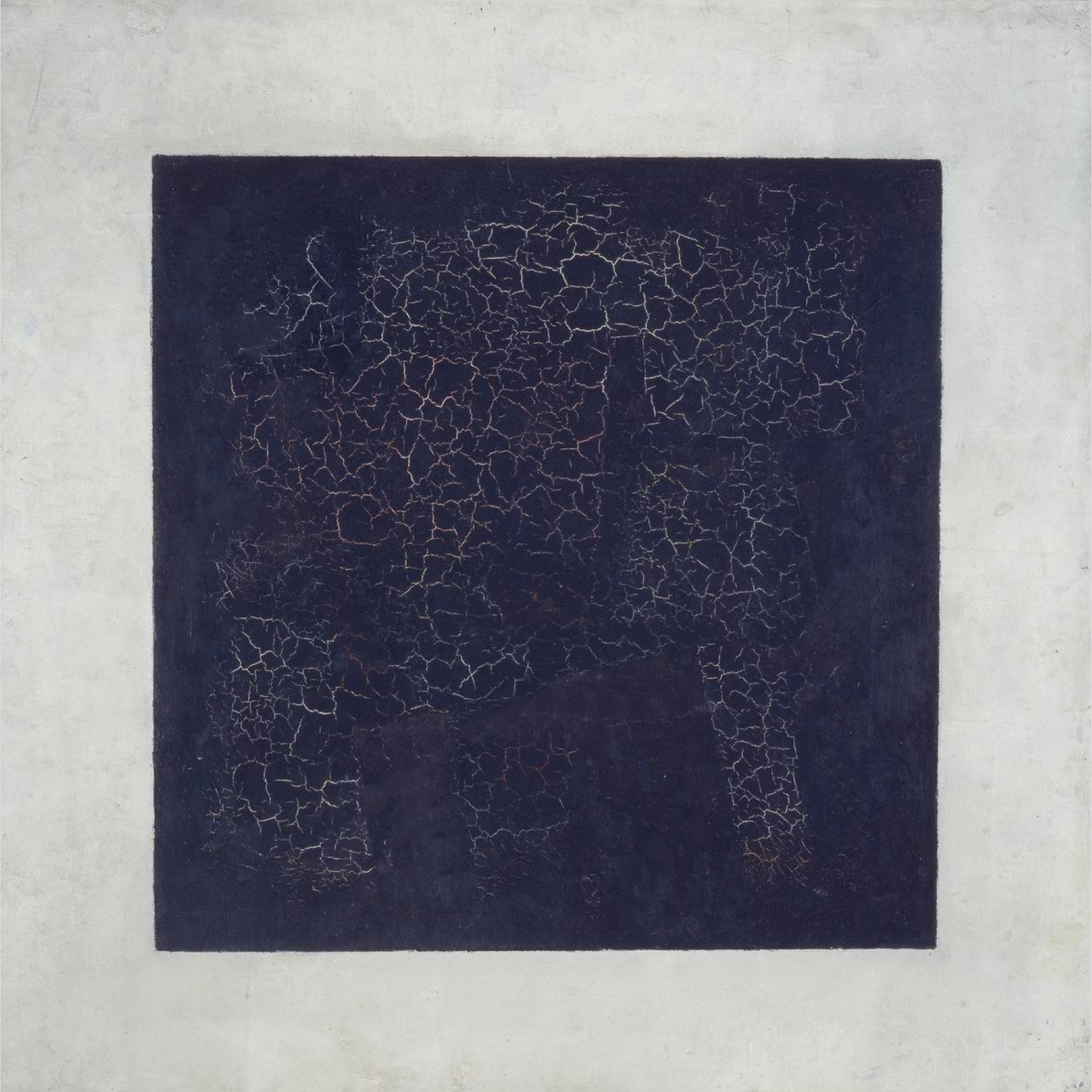
Kazimir Malevich, Black Square, 1915, Tretyakov Gallery, Moscow (public domain).
Warrant is built from below, out of the three details section 1 named — observer, context, record — plus the agreement of records produced independently of each other. That is what the oracle gave you in Unit 8, and what naming the Bernoulli convention did to an unresolvable disagreement. Less than certainty, and checkable: the trade this module has been making throughout.
"It's not the red of which we bleed" [Q2]. The red accent in these materials means divergence, never authority, and never travels without a word beside it. Warrant is assembled the same way: locally, from records you can point at, by someone who can be named.
6. Further context (optional)
Nothing in this section is required for the activity or checkpoint.
People and disciplines around the Macy Conferences
Participants came from mathematics, engineering, neurophysiology, anthropology, and psychiatry. They included Norbert Wiener, John von Neumann, Claude Shannon, Gregory Bateson, Margaret Mead, and Heinz von Foerster [C4]. The reflexive question was developed afterwards by von Foerster and the Biological Computer Laboratory [C1], Bateson [C5], and Maturana and Varela [C3].
For the complete bibliography, use course/references.md: [C1] to [C5] cover
second-order cybernetics and its history; [C6] and [C7] cover Gödel and Tarski.
course/second-order.md holds the structural account and the design constraints.
The register, and the rule that governs it
This is the only unit that uses the module's gothic register at full strength, including three short song quotations. It is a deliberate choice with a justification, not decoration: Ada Lovelace was Byron's daughter [G1], and the 1816 Villa Diodati gathering is where the ghost-story challenge associated with Frankenstein [G3] and Polidori's The Vampyre [G4] is conventionally dated [G2]. The connection is thematic; no claim is made that this literature influenced Lovelace's work.
Notice what those citations carry. [G2] is honest that the nearest thing to a primary account is Mary Shelley's own introduction to the 1831 edition, and still records the date of the ghost-story challenge as contested — a range, not a night. So: connection supported, dating conventional rather than documented to the day, influence claim not made.
The three songs mark the three steps at the top of this page: [Q1] the despair,
[Q3] the missing standpoint, [Q2] what is left. Take all three out and the argument
is unchanged, which is the test they had to pass. Each quotation is short,
attributed, and used for commentary; entries and rights position are in
course/references.md.
The one rule. The register may carry the argument and may never substitute for it. Every claim on an atmospheric slide still carries its citation or its uncertainty label. If a sentence in this unit sounds good and cites nothing, it is a defect, and you are entitled to say so.
7. What you can now do
- Say what the first-order/second-order distinction is, and where it came from.
- Name three things you did in this module that the second-order reading illuminates, while saying plainly that illumination is not proof.
- State Gödel's and Tarski's results within their actual scope, and say why neither settles anything about a language model on its own.
- Tell a proved theorem from an established research programme from an overclaim, when all three appear on the same well-written page.
Checkpoint
Work through the activity first: the checkpoint asks you to sort claims made by this unit, and it is a different exercise once you have sorted some yourself. It is the last thing the module asks of you.
From course/lab/:
python3 selfcheck.py run cp18-sort-the-claims # or in the browser
Both routes ask the same question and give the same diagnostics.
Where to look next
course/second-order.md— the fuller treatment this unit summarises.course/references.md— full entries for [C1] to [C7], the gothic-context entries, the three song quotations, and the source policy.
Timings: video 9 min, reading 15 min, activity 12 min.
Check yourself
This unit has one checkpoint, answered here. A wrong answer says which misunderstanding it matches. Nothing is uploaded.
Local progress is available in a supported browser.
Prefer a terminal?
The same questions, from course/lab/:
python3 selfcheck.py run --unit 18